Tattoo Aftercare - Do's and Dont's - Green Lotus Tattoo Brunswick Melbourne
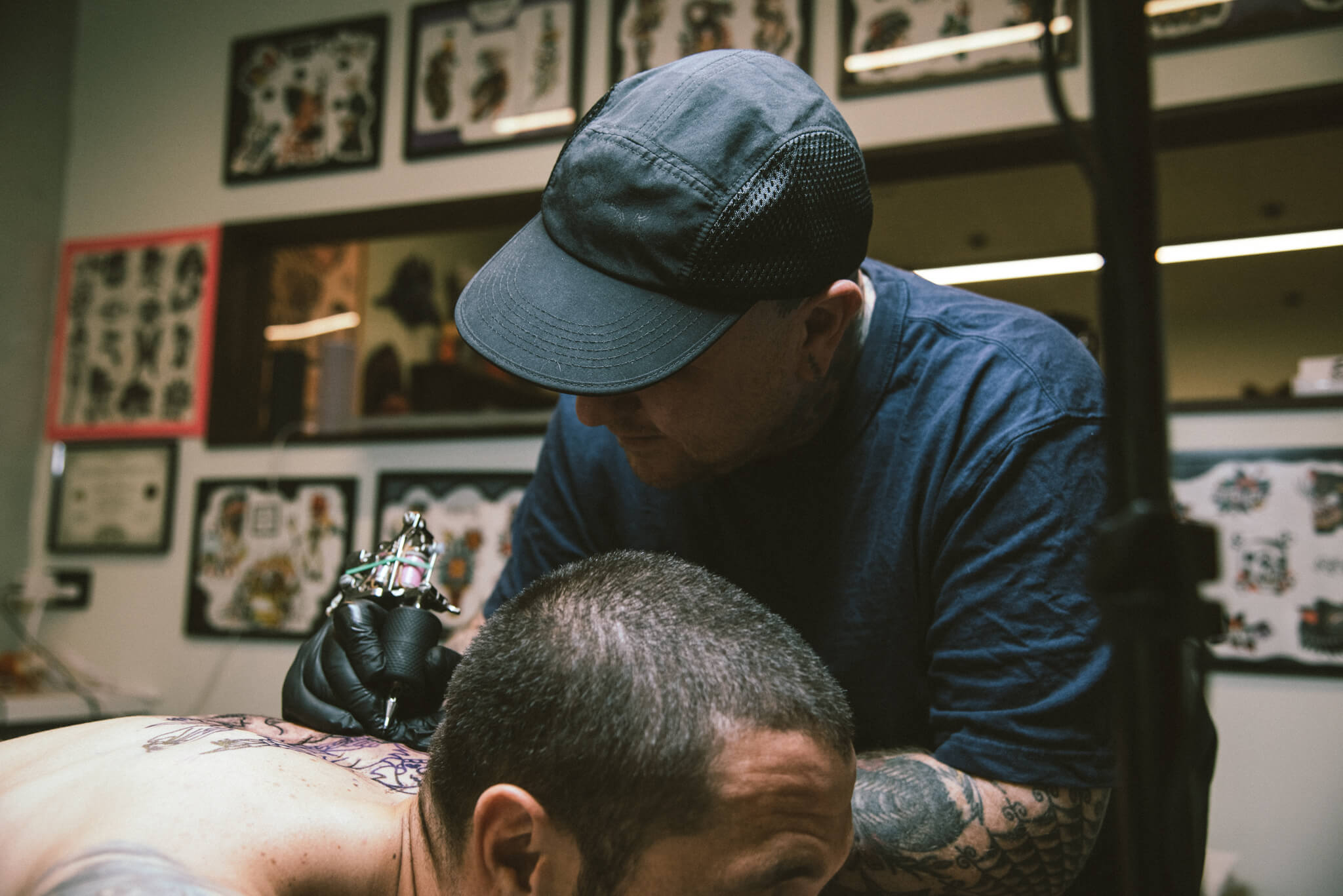
With over a 100 years of collective experience in the tattoo profession the senior tattooists at Green Lotus Tattoo, Brunswick Melbourne have put together this comprehensive guide on how healing a tattoo is done, what to watch out for, what to do and what not to do. And, we have added a bit of aftercare history for your entertainment!
Do’s and Dont’s of Tattoo Aftercare
So you have an amazing new tattoo but have forgotten everything your artist said to you about how to look after it before you left the tattoo studio!
Your friends all have heaps of advice but is it actually the right advice? With so much information online and so many different products claiming to be the best for the healing process it’s hard to know what is actually the best advice to take.
Well, you’ve come to the right place! With over a collective 100 years of experience in the tattoo industry the senior tattooists at Green Lotus Tattoo, Brunswick Melbourne have put together this comprehensive guide on how healing a tattoo is done, what to watch out for, what to do and what not to do. And, we have added a bit of aftercare history for your entertainment!
30 years ago, tattoo aftercare was a fairly basic affair. After an electrifying wipe down with alcohol (or metho) a lick of Vaseline was applied (if you were lucky) and a paper towel or glad wrap was taped to the tattoo and off you went. In the case of paper towel the tattooer may have told you to remove it however you most likely did not as it was virtually impossible to get off… so it stayed there for a few days (or weeks) until your clothes, shedding skin and sheer gravity peeled it off!
The basic advice which still stands today was always given!
· Keep it clean
· Don’t pick it
· Don’t put it in the Sun and,
· Don’t swim
Zoom forward 10 -15 years and the old paper towel stick on practice is gone, cling wrap was and for many still is where it is at. Cleaning advice has also evolved with washing and moisturising tips given.
Today most tattooers are educated around which soaps and products are best applied as well as what routine works.
But not all advice is the same. Often a protocol is based on what coverage you have had and where the tattoo is placed on your body. Your general health is also a consideration.
So let’s break it down into categories with advice specific to the area and type of tattoo, there is a summery below with point-by-point advice on immediate aftercare.
The general advice regarding no picking, no sun and no swimming is good as is the commonsense idea of keeping it clean, and no you should not let your dog lick it…
Hand Tattoo’s
As a rule we ask our clients who are getting job stoppers or palm pieces to wash their hands in warm to hot water and anti-bacterial soap before the tattoo is applied. The skin is also cleaned by the tattooer prior to and post the tattoo application.
Hand tattoos can be wrapped either with antimicrobial film(second skin) or cling wrap and horse tape to keep the work protected on your way home. The problem with hand jobs (oops) is keeping that film secure and inplace over the coming days.
If you work a dirty hands-on job, for example a trade we advise you cut the fingers off a nitrile powder free glove (we will give you some) and wear them during work hours, ensuring you wash / gently dry/ air then apply ointment before placing the glove on. Cleaning then changing that glove several times a day is also recommended and the minute you get home take it off, clean the piece and let it breathe. The best-case scenario is that you don’t work for several days after hand work, give the skin a chance to heal and avoid any risk of infection.
Hands and fingers can often take longer to heal than other areas on the body as the skin is in constant motion, if you can reduce the use of your hands even slightly in the days immediately after application it will help!
Finger tattoos are notoriously problematic with fall out often occurring. Keeping them dry, clean and lightly moisturised with a good quality product is a must.
Knees, Elbows and Necks
As above these areas are often difficult to keep covered dueto the movement of the body and almost impossible to apply second skin (anti-bacterialstay on film) to. A film of cling wrap and stretch tape will be applied foryour journey home and should be removed within 1 – 4 hours of getting thetattoo.
Remove the cover wrapping it in on itself (so you don’t getthe blood serum on your hands or house) and dispose of it into the generalrubbish bin. Jump in the shower with the water as warm as you are comfortablewith, when that water hits you will experience that “uwwwwwww….ahhhhhhh”sensation, first burning then soothing!
Wash your hands fist then wash the piece, rinsing well thenpatting dry with a clean, soft towel. Air the piece (see point 5 below) thenapply a thin even coat of product.
Knees and elbow are known to swell so icing and elevatingwill assist – see point 7 below.
Keep your hair out of your neck work and avoid wearing anynecklaces or dangly earrings that may touch the work until the work is healed –see summary below. Also avoid spraying perfumes onto the tattoo until it isfull healed. Neck work tends to heal quickly due to all the blood circulatingin the area so you won’t have to wait long until you can smell like rosesagain.
Sleeve and Back Work
Healing the outline of large-scale work is the easy part. This first stage of the tattoo application is the time to develop a good routine and healing protocol.
As people who wear bodysuits we recommend creating a tattoo kit, this can include clean comfortable loose clothing to get tattooed in, clothing to sleep in and a line-up of loose breathable clothing to wear in the recovery stage and first few days of healing. Stay away from polyesters and go for cotton/ natural fibre clothing.
Stock up on a mild antibacterial soap and after care ointment. The purchase of a few rolls of stretchy compression support stocking is also recommended; the type people wear when their legs are aching. These can be washed in hot water and soap and re used again and again. Wearing a support stocking over your new sleeve work be it arm or leg will assist with swelling as well as protect the piece when you’re out and about during the healing process.
Back work should also be covered, wearing a clean cotton t-shirt and changing it twice a day whilst maintain a good cleaning and moisturising protocol as is outlined below is essential.
One Shot Tattoos
Smaller tattoos require the same attention as larger ones, even if the tattoo is tiny. All tattoos break the surface of the skin and leave you susceptible to infection if not cared for appropriately. Fine line tattoos require particular care as even a small infection can see lines fall out or fade significantly, and there’s not much there to begin with rite so you need to look after it.
The last thing any tattooer wants is to be touching up work because you haven’t looked after it properly. There is a long line of people who will blame shoddy work whilst secretly knowing they neglected to care for the piece properly!
The summary below provides a clear protocol for caring foryour new tattoo, below that we will talk about products and infections
Summary – Aftercare Protocol
1. Leave the tattoo cover on for a maximum of 4hours
2. Remove the cover and dispose of it responsibly
3. Wash the area with warm water and a mild antibacterial soap, ensuring to rinse it properly
4. Pat the tattoo dry with a clean, soft towel (wash that towel in hot water immediately)
5. Let it air. Spend 20 – 40mins inside, ensuring nothing touch’s the area and allow the skin to completely dry before applying any ointment
6. Apply a thin coat of ointment with clean hands – remember if your hands have germs on them when you apply that product you are putting those germs on to!
7. Depending on placement and size of tattoo place a clean soft garment over the work. If it is sleeve work we recommend you put a stretchy support stocking over the entire area after you have completed the steps above. If you have had a big sitting with lots of coverage elevate an dice the limb, wrap a clean towel around frozen pea’s or steak (whatever your preference) and hold that over the tattooed area for 5 -10 minutes then move it to the next area, you will thank us in the morning for that tip!
8. I your tattoo is exposed at night ie it will touch your sheets, make sure the sheets are clean! And don’t use your best sheets, plasma and/or ink expelled from the skin during first 24hrs of healing is hard to get off!
9. In the morning repeat steps 3 to 6. If your pyjamas have stuck to the tattoo overnight don’t try to peel them off, get in the shower with them on and soak the area. They will come of easily and with out damaging the healing skin.
Around day 3-6 you will see the skin starting to flake. It can be nightmarishly itchy so keep it lightly moisturised and rather than scratching pat it. Those annoying pieces of flaking skin are tempting to pick; they are likely firmly attached at the bottom and pulling them off could leave an open hole which could scab and ultimately leave a light patch in the tattoo.
Second skin
If your tattooer has applied anti-bacterial film “second skin” leave this on for the advised time frame, usually 5 – 10 days. You can expect to see a a squishy mess under the film; this is a build-up of your plasma and excess skin cells and ink. Its completely normal.
After a week or so the peeling skin will have shed and the tattoo will look slight white., this is the new skin layer and is completely normal.
It is very important to keep the tattoo out of the sun during initial and ongoing healing.
And, if you want your tattoos to retain their vibrant colours and sharp lines you must continue to protect them from the sun.
Check out our blog article on tattoos and the sun!
Second skin.
If your tattooer has applied anti-bacterial film “second skin” leave this on for the advised time frame, usually 5 – 10 days. You can expect to see a a squishy mess under the film, this is a build-up of your plasma and excess skin cells and ink. It’s completely normal.
Once you remove the cover follow step 2 to 6 of the above advice for a couple of days, even though the skin will be sealed it is still healing so be kind to it.
Aftercare Products
The market is full of various products many including ingredients that you do not want to put onto an open area of skin.
Avoiding products that contain alcohol, mineral oils, fragrances, parabens, petroleum jelly and strong anti-bacterial agents which can trap bacteria and/or cause irritation.
The safest products are the natural ones specifically produced for tattoo aftercare.
Ask your tattooer what they recommend, we personally recommend Bamboo Goo and Ink Nurse is pretty good to.
https://bamboogoo.com/
https://ink-nurse.com/
If your looking for a cheaper all natural alterative try refined coconut oil, just make sure the jar is new and don’t stick your fingers in it, use a clean spoon for each application and never ever double dip.
Tattoo Infections – what to look out for and what to do!
Infections from tattooing can occasionally occur so it’s good to know what to look out for. Some redness, mild swelling, tenderness, and clear fluid oozing are normal during the first few days of healing.
If these symptoms persist or worsen however it could indicate an infection has begun.
The most common signs to watch out for are:
§ Swelling that persists or gets worse
§ Pain and tenderness that increases over time
§ Increasing or spreading redness (erythema) that worsens after the first week instead of fading
§ Warmth or heat in the area
§ Abnormal discharge or pus – yellow, green, brown or nasty smelling fluid (clear fluid early on is usually ok, but pus is not)
§ Itchiness that intensifies or does not subside
§ Bumps or raised lesions (sometimes containing pus)
§ Rash – red, bumpy or hive-like skin around the tattoo
§ Fever or chills
§ Sweats – day or night
§ Feeling generally unwell ie fatigue, shivering, waves of hot/cold.
Infections usually start within the first few days aftergetting a tattoo but can also appear a few weeks later.
If you notice any of these symptoms see a doctor right away! Most bacterial infections are treatable with antibiotics, but delaying can lead to complications!
This is not medical advice – always consult a healthcare professional.
Adhering to proper aftercare protocols greatly reduces infection risk!
Subscribe to our newsletter
Stay up to date with everything happening at Green Lotus including; Special Offers and Events as well as Guest Artist announcements.