Tattoo Schools in Australia - Are they a Scam? Here's why most artists say YES!
So, you’re interested in becoming a tattoo artist, and you’ve found an online course claiming to offer a straightforward path into the profession. It looks legitimate. The website photos are polished, the sales pitch makes it sound achievable and best of all, they offer payment plans. But is that really how you get into the tattoo industry?
Tattoo Schools inAustralia — Are They a Scam? Here’s Why Most Artists Say Yes
The Sales Pitch Sounds Good — But Is It Real?
So, you’re interested in becoming a tattoo artist,and you’ve found an online course claiming to offer a straightforward path into the profession. It looks legitimate. The website photos are polished, the sales pitch makes it sound achievable, and best of all, they offer payment plans.
But is that really how you get into the tattoo industry?
Will you actually leave with the skills needed to work in an established studio?
Will the certificate you receive be recognised by respected artists and reputable shops?
And will you learn the broad range of skills required to tattoo safely and competently?
Or will you end up practising on your mate in the kitchen, watching YouTube videos and desperately trying to pull a straight line, while being torn apart on social media by artists who learnt the craft the legitimate way?
Let’s talk about why so many legitimate tattoo artists strongly oppose tattoo schools.
Why Tattooing Can’t Be Learned Through Shortcuts
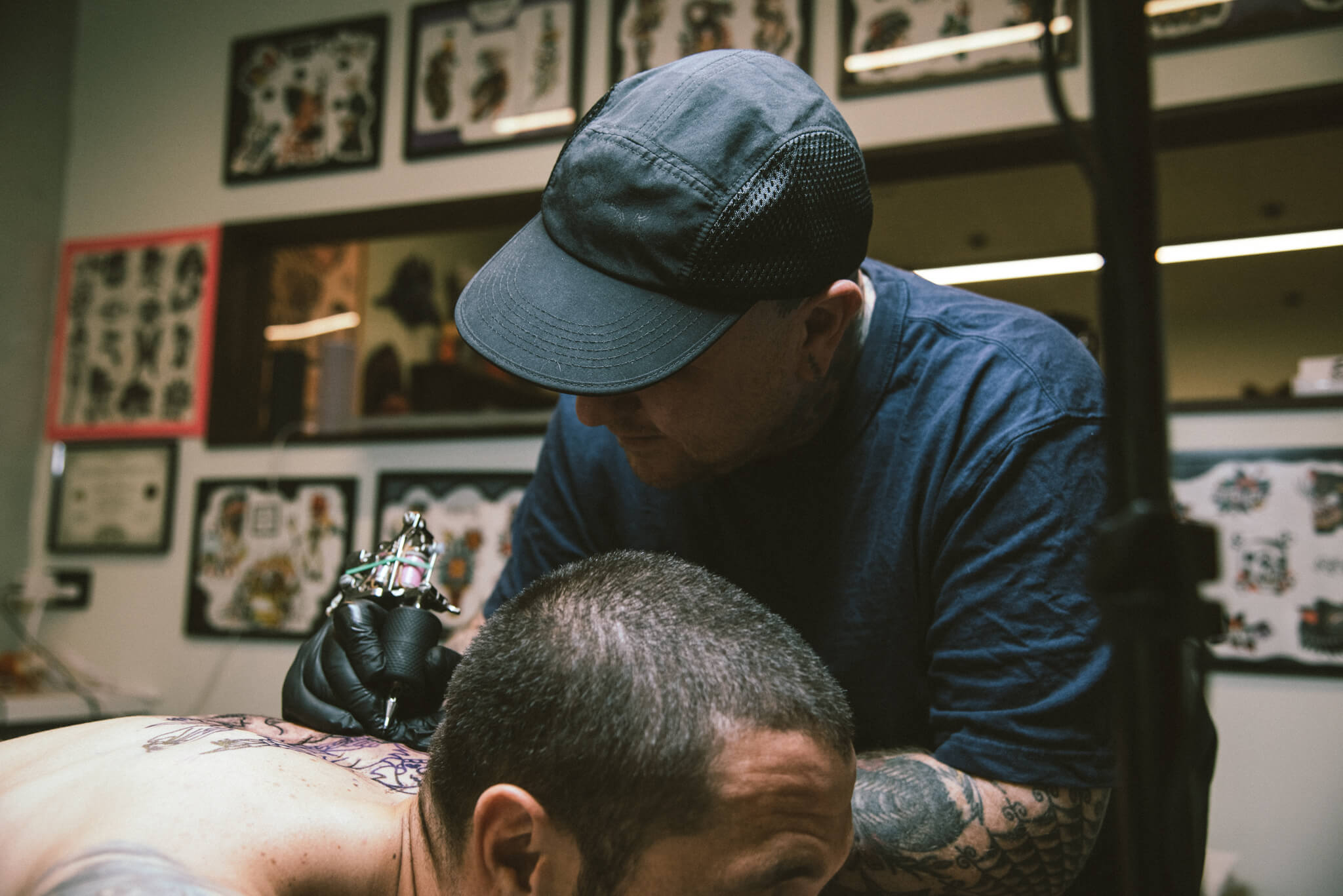
Learning to tattoo requires rigorous, hands-on practice. It involves hours of guided study in design, drawing, skin as a medium, pigment knowledge, needle knowledge, blood-borne pathogens, and aseptic technique; well beyond what is covered in a basic cross-contamination course. It also requires an understanding of tattoo culture, its traditions, and the professional standards that shape the industry.
There is no shortcut to this knowledge. It must be earned through experience; it cannot simply be bought.
What a Real Apprenticeship Gives You
A genuine apprenticeship also gives you something a tattoo school cannot easily replicate: community.
The people you meet while learning properly are invaluable. Paint nights, swap meets, conventions, studio culture, and being part of a crew all contribute to your development as an artist.
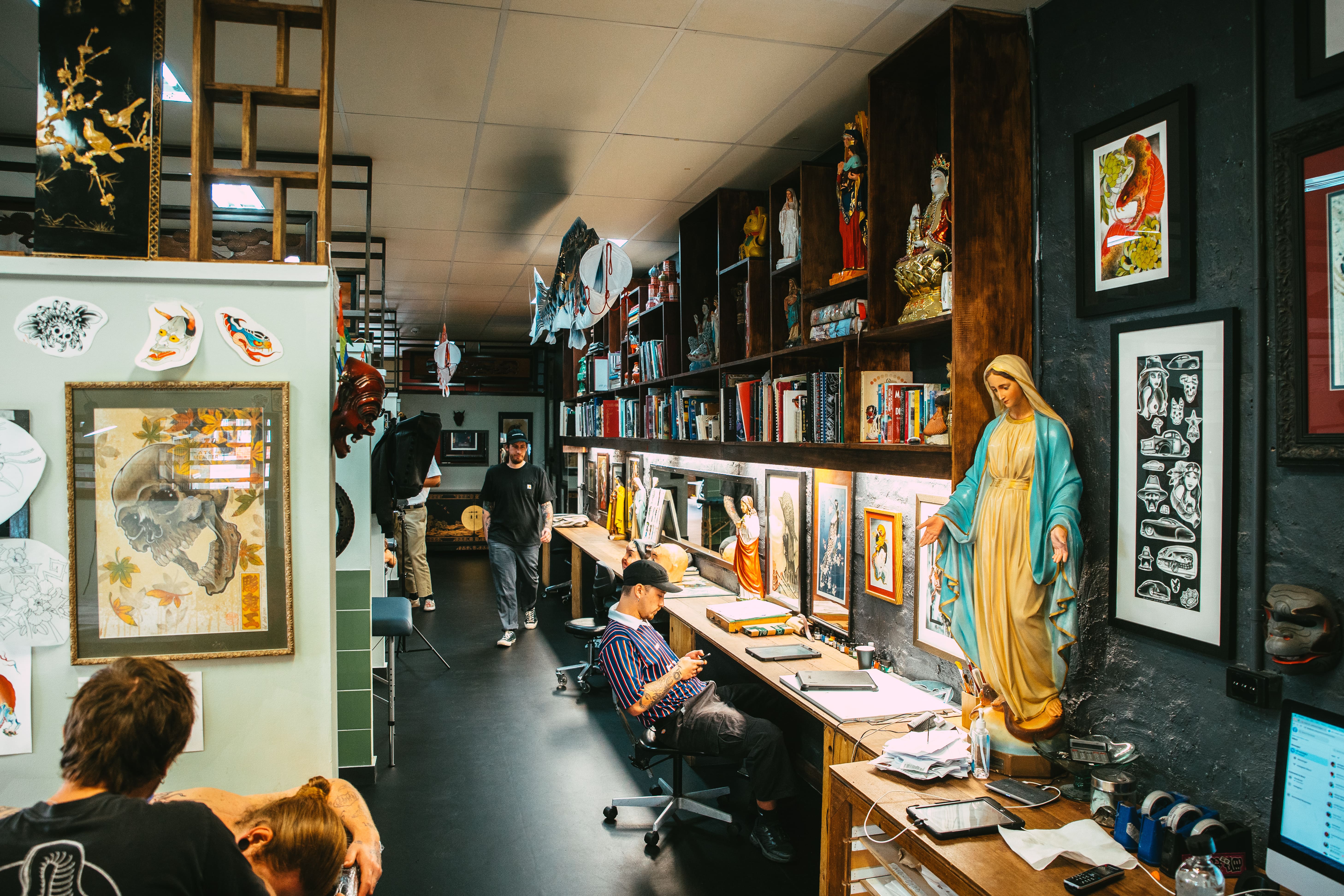
You learn by observing consultations, understanding client expectations, seeing different tattoo styles in practice, working within a studio environment, respecting the tools and equipment, and receiving direct feedback from experienced artists as your skills develop.
Why Many Artists Reject Tattoo Schools
Tattoo schools often sell themselves as a shortcut, but most artists see them as ineffective and misleading.
They can leave aspiring tattooers underprepared, with an incomplete skillset and little chance of securing work in a reputable studio.
Many of these courses charge thousands of dollars for basic starter kits; often including equipment that working professionals would never use because of its poor quality.
Worse still, many of these programs are delivered entirely online: just you, a cheap tattoo kit, and a series of pre-recorded videos from someone who may have little standing within the broader tattoo community.
Instead of giving you a genuine pathway into the industry, they are simply taking your money while selling you a false sense of readiness....it's a scam.
If You’re Serious About Tattooing, Take the Long Road
If you really want to join the tattoo industry, you’ll have to work for it.
The industry is highly competitive, so take your time. Study design through TAFE or university. Learn to draw properly. Understand colour theory, chroma, hue, value, and composition. All of that knowledge will strengthen your work and give you a far better foundation in the long run.
Build a portfolio. Get tattooed by artists you admire. Talk to them about your goals. Listen carefully to their advice — and if it resonates, take it seriously.
Be honest about what you’re doing. Be passionate. Respect the craft and enjoy the journey.
Final Thought
Tattooing is a privilege that is earned — not bought.
Tashi GLT
Subscribe to our newsletter
Stay up to date with everything happening at Green Lotus including; Special Offers and Events as well as Guest Artist announcements.